Bags & Accessories
Your Work Tote's Weak Points: Laptop Fit, Handles and Strap Anchors
How to judge a women's work tote by laptop protection, handle drop and strap anchoring — with picks from Lo & Sons, Cuyana and Madewell rated by owners.
Clothing, shoes & accessories, honestly reviewed
Bags & Accessories
How to judge a women's work tote by laptop protection, handle drop and strap anchoring — with picks from Lo & Sons, Cuyana and Madewell rated by owners.
By Elena Brooks · Accessories & Jewelry Editor
Last updated August 28, 2026
Some links below are affiliate links — if you buy through them, we may earn a commission at no additional cost to you.
Top Pick
4.6/5Wirecutter's top laptop tote with a padded 13-inch sleeve, shoe compartment and trolley sleeve — 4.6 from 1,450+ owner reviews.
~$284 suggested
Leather Pick
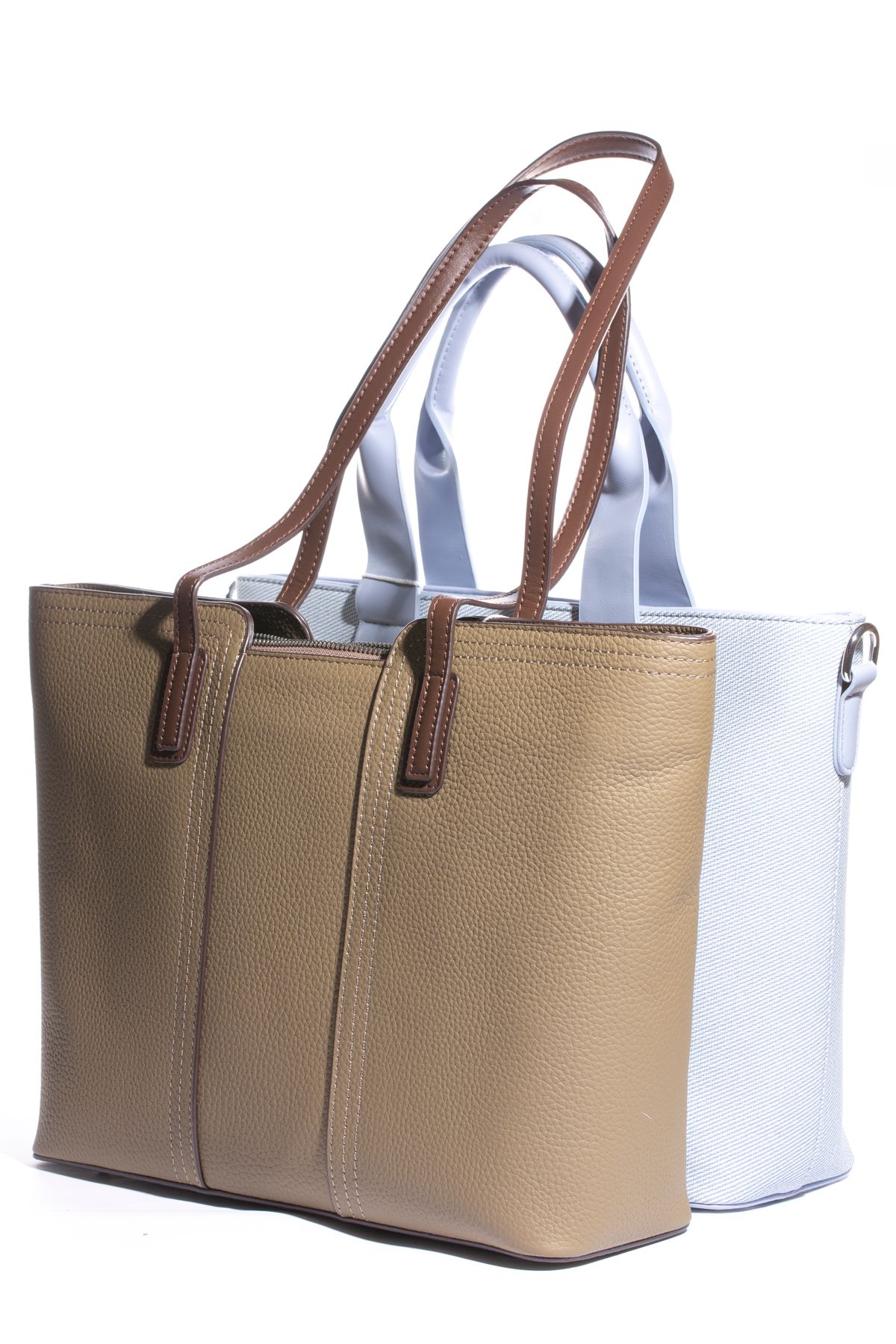
4.5/5Lightweight Italian pebbled leather that fits a 16-inch laptop and develops a patina — add the snap-in sleeve for real protection.
~$298 suggested
Budget Leather Pick
4.5/5Full-grain leather at half the price with two carry options — no padding, so pair it with a hard-shell laptop case.
~$168 suggested
A work tote fails in two places: the laptop sleeve that does not fit your actual machine, and the handles that pull loose once the bag is loaded. Everything else — color, monograms — is secondary. Owner ratings and spec sheets line up well enough on the top sellers to separate the durable choices from the pretty ones, and the failure patterns they describe are consistent enough to check for yourself in ten minutes.
Laptop fit comes first. Check the padded compartment’s stated size, not the marketing: Lo & Sons’ O.G. 2, for example, fits a 13-inch laptop in its padded sleeve, while larger machines only fit loosely in the main compartment. Leather totes like Cuyana’s often have no dedicated sleeve and expect you to buy one separately. Second, handle geometry: a drop under 10 inches forces hand-carry; 11 to 12 inches clears a padded jacket shoulder. Third, weight — an empty tote at 2.5 pounds is already a third of a sane carry load.
Handle drop is the spec shoppers skip and then regret. It is measured from the top of the strap loop to the top edge of the bag, and it governs how the bag sits on the body: under 10 inches the bag tucks into the elbow and must be carried by hand, 11 to 12 inches clears a winter coat or blazer shoulder, and anything longer drags the bag toward the knee on a short torso. Brand pages list the drop on real product specs but hide it in lifestyle copy, so ask for the number before falling for the photo. The seatbelt-style crossbody on the O.G. 2 exists precisely because a short handheld drop and a long shoulder strap solve different days.
The distinction that matters is inside the sleeve versus inside the bag. A machine in a padded sleeve is suspended above the base, so a set-down on pavement travels through foam rather than through aluminum. A machine loose in the main compartment takes every impact directly, which is why the same tote protects differently for the owner who bought the snap-in sleeve and the one who did not. Measure your machine diagonally with its case on, then compare that number to the stated fit — a 14-inch laptop with a hard shell does not fit a sleeve labeled for a bare 14-inch machine, and no amount of pushing changes the corner radius.
Lo & Sons The O.G. 2. The nylon standard that Wirecutter names its top laptop tote, with a rating of 4.6 from over 1,450 reviews on the brand’s own site. The medium ($284) carries a padded 13-inch laptop sleeve, a separate shoe compartment, a trolley sleeve, and a seatbelt-style crossbody strap. Owners consistently praise the protection and organization; the common complaint is weight, at about 2.6 pounds empty.
Cuyana Classic Easy Tote. The leather option, rated 4.5 from roughly 5,400 ratings aggregated on the Shop app. At $298 it is lighter than it looks (1.6 pounds), takes a 16-inch laptop in the main compartment, and ages into a patina that long-term owners praise. Two trade-offs: the leather scuffs against denim, and laptop protection requires the snap-in sleeve sold separately at around $118.
Madewell The Transport Tote. The full-grain leather value at about $168, rated 4.5 from more than 1,000 retail reviews. It fits a 13-inch laptop plus everyday items, carries by short handles or an adjustable buckle shoulder strap, and a zip-top version exists. There is no padding, so pair it with a hard-shell case.
| Tote | Laptop fit | Handle setup | Best for |
|---|---|---|---|
| Lo & Sons The O.G. 2 | Padded 13” sleeve | Short handles + long crossbody strap | Commuters and flights |
| Cuyana Classic Easy Tote | 16” in main, sleeve extra | Two strap lengths, no closure | Polished leather carry |
| Madewell The Transport Tote | 13” unpadded | Short handles + adjustable strap | Budget full-grain leather |
The table compresses the real decision into one row: closure. The O.G. 2 zips, which protects the contents on a train and hides them on a platform. The Cuyana and the Transport sit open at the top, which is faster for work and worse for crowds. That single difference shapes the commute more than leather versus nylon does, and it is worth deciding before you fall in love with a material.
Wherever handles anchor, look for box stitching rather than a few straight passes — this is the failure point reviewers photograph most on cheap totes. On nylon bags, check that a crossbody strap’s adjuster holds tension; slipping adjusters are a recurring complaint. Lift the empty bag first: padded bases and metal feet protect the laptop inside it.
The physics are simple and worth internalizing. A loaded tote puts its entire weight on four narrow strap anchors, and the load multiplies when the bag is set down by the strap instead of the body — an abrupt jerk that briefly doubles the force. Reinforcement shows up as cross-stitching in an X or box pattern, a second layer of leather under the anchor, or rivets through a folded tab. None of these guarantee failure never happens, but their absence is the pattern behind the photographs of detached straps that dominate one-star reviews on under-$50 totes.
The material choice is mostly a weight-and-weather decision dressed up as a style one. Nylon of the sort used on the O.G. 2 weighs a fraction of comparable leather, sheds rain, and scrubs clean; its weakness is abrasion at the base corners, which is what the padded base and feet address. Leather looks right in meetings and stiffens into structure with age, but it drinks water, shows scratches against rough surfaces, and adds weight before anything goes inside — the Cuyana’s 1.6 pounds is light for leather.
Pebbled grain, like the Cuyana’s, hides scuffs better than smooth grain because the texture breaks up the mark instead of leaving a glossy line across it. Full-grain, like the Madewell’s, scratches more visibly but burnishes rather than peels over years, which is why long-term owners describe a patina while budget corrected-leather totes describe flaking. Both honest outcomes cost more up front than the coated leather that splits at the handle anchor in its first winter. If your commute involves rain and crowds, nylon with a zip; if your days involve meetings where the bag sits on a table, either leather works as long as you accept the sleeve purchase.
Nylon and leather want opposite routines. The O.G. 2’s shell spot-cleans with mild soap and water, and the practical owners’ trick is cleaning the base corners before they gray — dirt abrades nylon fiber the way sandpaper does, so a wiped bag wears longer than a dirty one. Let it air-dry open rather than on a radiator, since heat can warp coatings and stiffen webbing.
Leather asks for conditioning rather than washing. A thin coat of cream conditioner two or three times a year keeps the Cuyana’s pebbled hide from drying out at the handle fold, which is where a tote flexes most; over-conditioning swells the finish and attracts grime, so less is more. Wipe off rain the same day it lands, stuff the bag with paper when it goes on the shelf so the body keeps its shape, and store it in the dust bag rather than a plastic bin, where trapped humidity blooms mildew. The Madewell’s full grain responds to the same routine and rewards it with the burnished surface that keeps owners carrying it past the five-year mark — care, as much as construction, is what makes the budget pick a long-term pick.
Weigh what you actually carry for a week. A 13-inch machine at about three pounds in a case, a water bottle, a lunch container, and a small pouch cross two-thirds of a realistic daily budget, and the empty bag itself is the last line item — which is how the O.G. 2’s 2.6 pounds becomes the deciding spec rather than a footnote. A tote that leaves the house at five pounds loaded will end up carried by hand, not on the shoulder, and the handle drop you chose for jacket clearance becomes irrelevant.
Two capacity checks beat reading dimensions. First, fill a paper bag with the actual daily load and set your laptop case on top: if the contents tower above the case, you need a tote with vertical depth, not width. Second, look at where the trolley sleeve sits before ordering — a sleeve that crosses the main compartment’s opening fights you every time you reach in, and layout photos tell you more than the spec line does. These are the details that decide whether a tote gets used for years or reassigned to a closet after one trip.
The sleeve itself rewards a close look. A padded sleeve adds weight and bulk, so some brands skip it and rely on the owner’s case; that is a fair trade only if the case is genuinely protective, and it is the reason the Madewell pairing advice in the picks above says hard shell rather than sleeve. When a bag does include padding, check that the sleeve closes — a flap or zip keeps the machine from sliding out of the sleeve when the tote tips sideways on a train floor, which is the drop scenario owners actually report, not the dramatic overhead fall.
If you commute or fly with a 13-inch machine, the Lo & Sons The O.G. 2 is the spec-safe pick, and its rating base is large enough to trust. Choose the Cuyana Classic Easy Tote when the bag needs to look right in meetings and you will add the sleeve. The Madewell The Transport Tote covers the same leather brief for less, provided your laptop case absorbs the shocks. Keep the leather honest with our guide to how to clean a leather bag, and see best crossbody bags for travel for the hands-free option.
| Tote | Laptop fit | Handle setup | Best for |
|---|---|---|---|
| Lo & Sons The O.G. 2 | Padded 13" sleeve | Short handles + long crossbody strap | Commuters and flights |
| Cuyana Classic Easy Tote | 16" in main, sleeve extra | Two strap lengths, no closure | Polished leather carry |
| Madewell The Transport Tote | 13" unpadded | Short handles + adjustable strap | Budget full-grain leather |
Everything on this page comes back to one question: what does the label tell you, and what does the thing do on month three? Start at the care companion to build a washing and storage routine that fits what you actually own.
The ASTM D5489 symbol system, decoded operation by operation.
Cool-water washing, de-pilling without damage, moth-proof storage.
What feeds the aging curve and what breaks it.
Elena Brooks · Updated September 19, 2026
Elena Brooks · Updated September 19, 2026
Elena Brooks · Updated September 10, 2026
Elena Brooks · Updated September 7, 2026