Bags & Accessories
Reading a Women's Leather Belt Like a Cobbler: Grain, Buckle, Width
How to buy a women's leather belt by grain grade, buckle metal and width — Madewell, TYWestyles and WOLFANT compared on owner ratings and sizing.
Clothing, shoes & accessories, honestly reviewed
Bags & Accessories
How to buy a women's leather belt by grain grade, buckle metal and width — Madewell, TYWestyles and WOLFANT compared on owner ratings and sizing.
By Elena Brooks · Accessories & Jewelry Editor
Last updated September 7, 2026
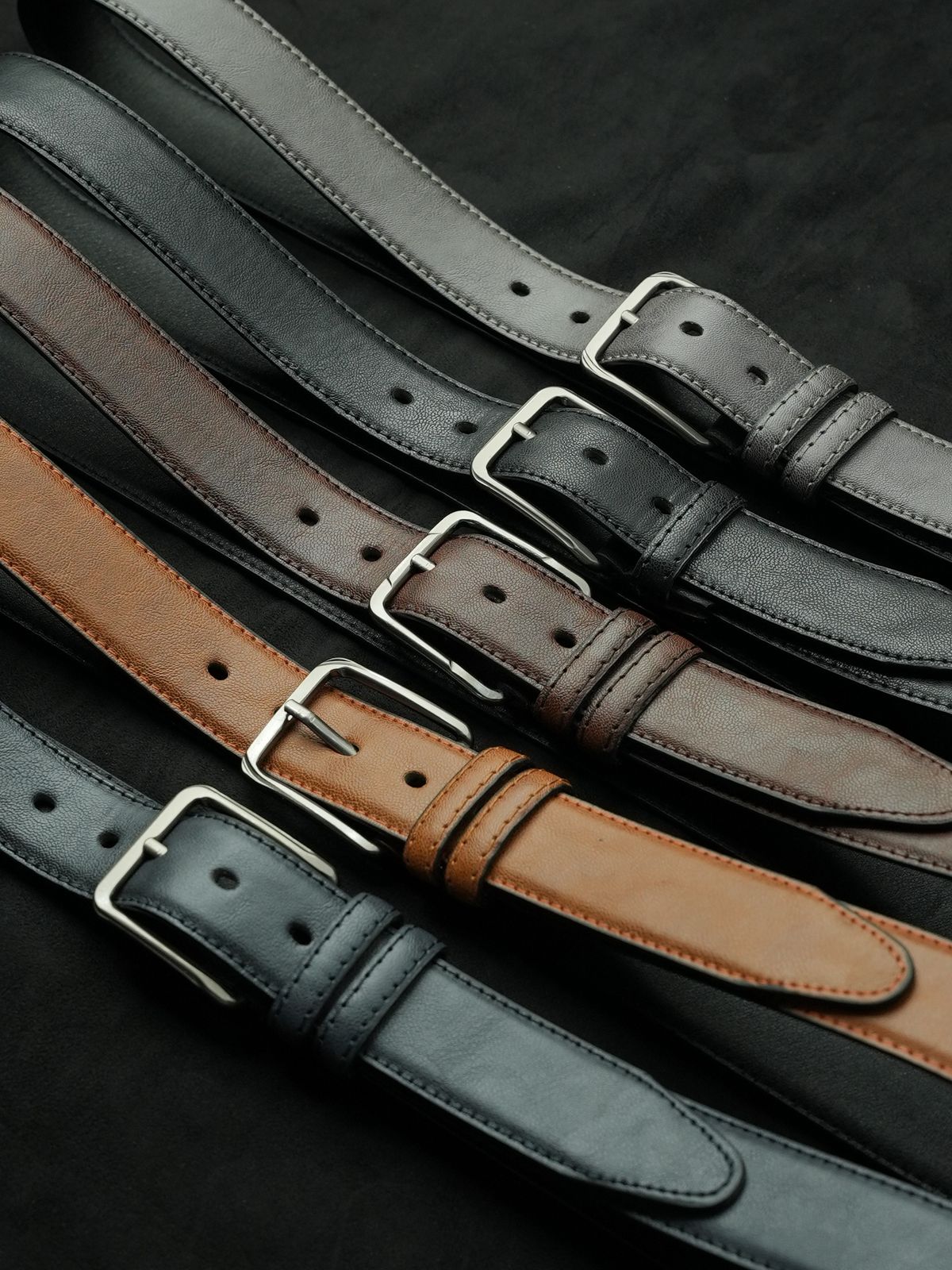
Some links below are affiliate links — if you buy through them, we may earn a commission at no additional cost to you. As an Amazon Associate, we earn from qualifying purchases.
Top Pick
4.7/5Full-grain 1.3-inch strap with a tarnish-resistant brass-tone buckle — 4.7 from 627 Bloomingdale's reviews; runs large, size down.
~$48–58 suggested
Budget Pick
4.6/54mm full-grain strap with a heavy vintage brass-finish buckle and included punch tool — 4.6 in aggregated retail reviews.
~$25–35 suggested
Dress Pick
4.6/51.1-inch 100% Italian full-grain strap with seven reinforced holes so no single hole stretches — runs small, size up.
~$40–60 suggested
A cheap belt announces itself within a year: the bonded-leather strap cracks at the most-used hole, the plated buckle finish wears to gray metal, and the edges peel. The fixes are spec-level throughout: start with full-grain leather, add solid or well-finished hardware, and match the width to your wardrobe — none of it requires designer prices. Owner ratings across hundreds of reviews verify the differences.
The leather hierarchy runs full-grain, top-grain, genuine, bonded. Full-grain keeps the hide’s outermost layer, so it develops a patina instead of cracking; long-term owners of the belts below describe darkening around the favorite hole that reads as character rather than damage. “Genuine leather” is a legal grade, not a quality claim — it often means the sanded layer beneath full-grain, and it is what most $15 belts actually are. If a listing does not say full-grain explicitly, assume it is not.
The distinction is structural, not cosmetic. The outermost layer of a hide carries the densest fiber network, which is why full-grain resists the repeated bending a belt takes every time it closes. Sand that layer off and the exposed fibers underneath absorb moisture faster and crack along fold lines within a couple of years. Our leather grades explained guide walks the full hierarchy with the tannery terms behind each label.
Top-grain is the honest fallback if the budget will not stretch. Sanding removes the outermost surface of the hide, which costs some patina but leaves plenty of fiber density; a well-made top-grain strap still outlives any bonded belt by years. The trap is paying full-grain prices for it, which is why the material line deserves a close read rather than a glance.
A 1.25-inch strap is the sweet spot for a woman’s wardrobe: substantial enough for jeans, slim enough for trousers. Dressier looks run 1 to 1.1 inches; casual Western-inspired styles run 1.5. Check your belt loops first — standard women’s loops clear about 1.5 inches, but the buckle needs clearance to sit flat. Widths under 1 inch are decorative and will not hold up high-rise denim.
Width also decides where a belt can be worn without fighting its geometry. A wider strap looks proportionate on denim because jeans sit lower and bulkier at the waist; the same strap over fine trouser fabric bulges the waistband and reads heavy. Measure a belt you already wear happily and buy within a quarter inch of it. That single number prevents more bad belt purchases than any brand comparison.
The keeper deserves a glance too. On cheap belts the keeper is a stiff loop of the same bonded material, and it is often the first part to crack — long before the strap itself gives up. A stitched or substantial keeper is a small signal that the maker spent money where wear actually happens.
Madewell Medium Perfect Leather Belt. The full-grain reference, rated 4.7 from 627 reviews at Bloomingdale’s, at roughly $48 to $58. The 1.3-inch strap breaks in within days, the brass-tone buckle resists tarnishing even against jean rivets, and owners report years of daily wear. The known flaw: it runs large, and reviewers sized down one size.
TYWestyles Full Grain Brass Buckle Belt. The budget workhorse near $25 to $35, rated 4.6 in aggregated retail reviews. The 4-millimeter full-grain strap is thicker than anything else at the price, with a vintage brass-finish buckle that has real weight, plus a punch tool. Sizing runs large and the strap is stiff for the first week.
WOLFANT Italian Full Grain Leather Belt. The dress-leaning pick at about $40 to $60, rated 4.6. The 1.1-inch 100 percent Italian full-grain strap stays flat without curling, and seven reinforced holes spread the stress so no single hole stretches out. It runs small — reviewers advise sizing up.
| Belt | Leather / width | Rating | Best for |
|---|---|---|---|
| Madewell Medium Perfect Leather Belt | Full-grain, 1.3” | 4.7 (627, Bloomingdale’s) | The everyday default |
| TYWestyles Full Grain Brass Buckle Belt | Full-grain 4mm, 1.1” | 4.6 (aggregated retail) | Budget jeans belt |
| WOLFANT Italian Full Grain Leather Belt | 100% Italian full-grain, 1.1” | 4.6 (aggregated retail) | Trousers and office |
Three full-grain straps at three price points, and the differences that remain come down to width and finish rather than hide quality. The Madewell takes the widest strap into the widest range of wardrobes. The TYWestyles spends its budget on strap thickness instead of brand markup, which suits denim duty even if the first week of wear is stiff. The WOLFANT is the one cut slim enough to disappear under a blazer.
Ratings tell a quieter story than the price tags. All three land within a tenth of a star, which says the quality floor for a full-grain belt now sits near $30 rather than near $80. Paying more buys finish and fit consistency, not a fundamentally better strap.
Bonded leather is the material behind most belt failures, and the mechanism is worth knowing so you can spot it early. Bonded straps are scraps and fibers compressed with adhesive, so they lack continuous fibers across the strap; the first sign is a hairline crack running across the width at the hole you use most. Edge paint is the second telltale — inexpensive belts seal their cut edges with a lacquer coat instead of finishing them, and that coat chips off in flakes within a season. Once either failure starts, it spreads, because the strap is bent closed every single day. A full-grain strap flexes at the same point without separating, which is the entire reason the grain grade gets this much attention.
Holes fail before straps do on cheap belts, for the same material reason. A punched hole in bonded leather gradually tears into an oval because the compressed fibers have nothing to hold them together, and an oval hole makes the buckle sit crooked, which speeds the wear. Reinforced holes like the WOLFANT’s seven spread the load across stitched points instead. If a belt you own has started stretching at one hole, moving rotation to a neighboring hole buys time but not years.
Two lines of a belt listing carry most of the decision. The material line should name the grain explicitly; phrases like “genuine leather” or “real leather” or an unqualified “leather belt” tell you nothing about which layer of the hide you are buying. The dimensions line should give strap width in inches and thickness in millimeters — anything thinner than 3 mm tends to curl at the buckle over time, while the 4-millimeter TYWestyles strap shows what a dense weave of full-grain fiber feels like at the budget end. Skip listings that only size belts by pants size without giving a strap length in inches, because the mapping between the two is inconsistent across brands.
Buy from a seller with easy returns, whatever the price point. Belt sizing runs off in both directions across the picks above, and the documented run-large and run-small notes came from owners who could exchange without friction. A belt is one of the few accessories where the first fastening tells you everything, so a no-questions return window is worth more than shopping purely on price.
Solid brass or heavy alloy buckles outlast plated zinc, which grays at the contact points within months. On sizing, be skeptical: belts sized by pants size are unreliable, so measure your waist where the belt sits. Every pick here runs off-size in a documented direction — Madewell and TYWestyles large, WOLFANT small. A belt sized from a waist measurement should leave several inches of strap past the buckle once fastened; if a listing’s size chart cannot tell you the strap’s total length, you are buying blind.
Buckle construction splits into two camps worth knowing. Sewn closures fix the buckle permanently and fail only if the stitching goes, while snap or screw closures let you swap buckles between straps — handy, but the attachment points add flex that cheap versions exploit. A prong with a smooth roller where it passes through the hole also reduces wear on both the pin and the leather; a raw prong dragging against a dry strap is what grooves a hole into a slot over time.
Full-grain leather wants two things: occasional conditioning and a day off between wears. Conditioner keeps the fibers from drying at the favorite hole, where stress concentrates; rotation lets a strap’s shape recover overnight instead of taking a permanent set. Keep the strap fed with leather conditioner the way you would maintain a bag — our how to clean a leather bag guide covers the routine — and store belts coiled loosely rather than hung by the buckle, which warps the strap near the fold. None of this takes more than a few minutes a season.
The Madewell Medium Perfect Leather Belt is the spec-safe one-belt answer: full-grain, correctly wide, and rated on a large enough review base to trust. Add the TYWestyles for rugged denim duty and the WOLFANT when trousers dominate. Whichever you pick, the checklist stays the same: named grain, stated width, hardware with weight, and a sizing direction you know in advance. Slot the finished look into a rotation from the capsule wardrobe checklist.
One last habit protects any belt you settle on: dry it slowly when it gets soaked. Rain-soaked leather left on a radiator or near a heater dries brittle and cracks along the fold, while the same strap air-dried flat at room temperature comes through unchanged. Water itself rarely ruins full-grain; fast heat does.
| Belt | Leather / width | Rating | Best for |
|---|---|---|---|
| Madewell Medium Perfect Leather Belt | Full-grain, 1.3" | 4.7 (627, Bloomingdale's) | The everyday default |
| TYWestyles Full Grain Brass Buckle Belt | Full-grain 4mm, 1.1" | 4.6 (aggregated retail) | Budget jeans belt |
| WOLFANT Italian Full Grain Leather Belt | 100% Italian full-grain, 1.1" | 4.6 (aggregated retail) | Trousers and office |
Everything on this page comes back to one question: what does the label tell you, and what does the thing do on month three? Start at the care companion to build a washing and storage routine that fits what you actually own.
The ASTM D5489 symbol system, decoded operation by operation.
Cool-water washing, de-pilling without damage, moth-proof storage.
What feeds the aging curve and what breaks it.
Elena Brooks · Updated September 19, 2026
Elena Brooks · Updated September 19, 2026
Elena Brooks · Updated September 10, 2026
Elena Brooks · Updated September 5, 2026