Guides
Sports Bra Support Levels Explained: Low, Medium, High and What Changes
How low, medium and high support sports bras actually differ, what the breast-motion research measures, and how to match the support level to your workout.
Clothing, shoes & accessories, honestly reviewed
Guides
How low, medium and high support sports bras actually differ, what the breast-motion research measures, and how to match the support level to your workout.
By Claire Whitmore · Fashion Editor
Last updated October 12, 2026
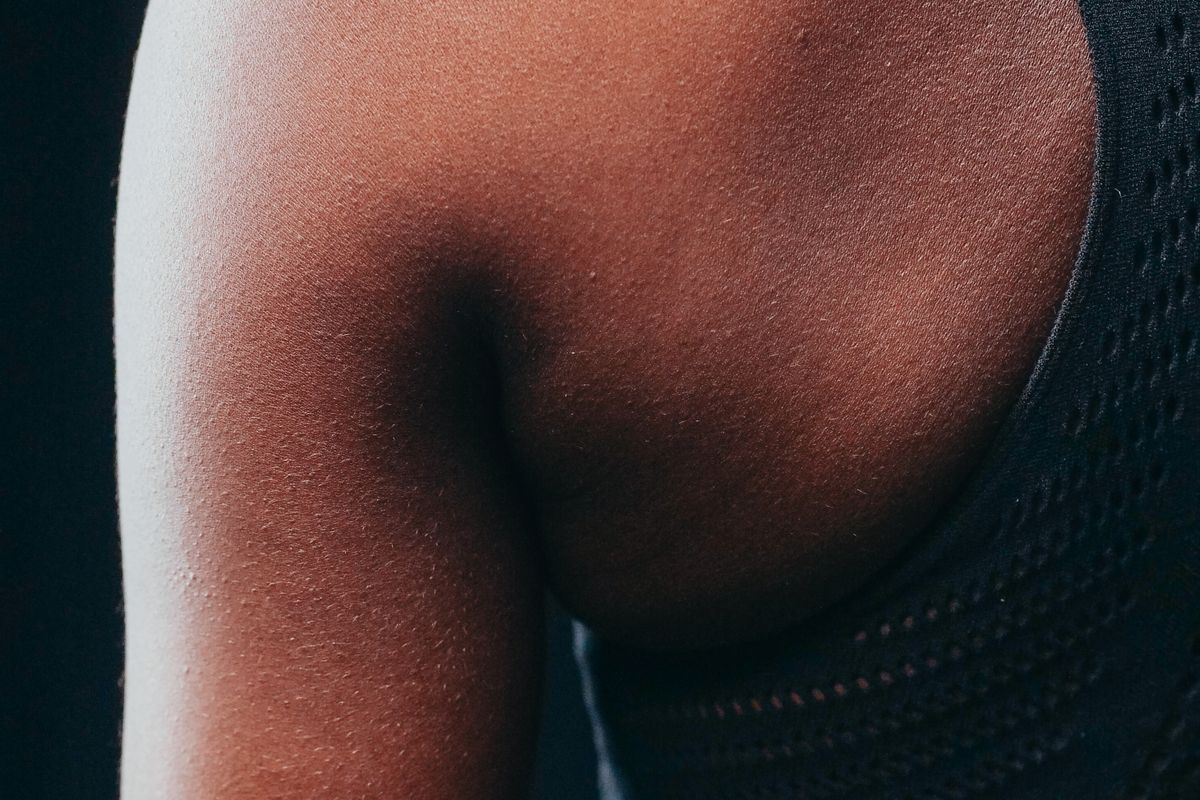
Sports bra support labels — low, medium, high — are impact categories, not comfort grades. They describe how much breast motion the bra controls, and the tiers map onto what your torso is doing, not how hard the workout feels overall.
Low support covers activities where the torso stays mostly upright and vertical motion stays small: yoga, Pilates, walking, stretching. These are usually pullover constructions, lightly lined or unlined, trading motion control for ease and breathability.
Medium support assumes real but intermittent bounce: cycling, strength training, dance-inspired classes, hiking. Expect wider bands, structured cups, and straps set wider on the shoulder to spread load.
High support is engineered for running, HIIT, jump rope and anything with repeated takeoffs and landings. Vertical displacement is largest here, answered with padded or underwired cups, adjustable bands, racerback straps, and usually a hook-and-eye closure.
| Activity | Typical support level |
|---|---|
| Yoga, Pilates, walking | Low |
| Cycling, strength training, hiking | Low to medium |
| Dance classes, jogging | Medium to high |
| Running, HIIT, jump rope | High |
The table has fuzzy edges on purpose. Support level describes the bra, not the person; two cyclists with different cup sizes can need different tiers for the same class. Treat the activity column as a starting point and let the fit checks below settle it.
Breast-motion labs track displacement in three axes — up-down, side-to-side, forward-back — using markers on the torso and nipple point. The Research Group in Breast Health at the University of Portsmouth, profiled by MIT Technology Review in 2026, reports that the most effective high-impact sports bras cut breast movement by up to 74 percent compared with wearing no bra. The same lab notes that an hour of slow jogging can produce roughly 10,000 bounces. Published biomechanics work puts unsupported vertical breast movement during running at about 4.2 to 9.9 centimeters, plus side-to-side motion — a figure-eight path, not a straight line. The lag between torso and breast has its own name in the literature: breast slap.
Those numbers matter when shopping: a medium bra is designed against a smaller motion budget than a high one. If your workout sits near a boundary, buy the higher tier — over-buying costs comfort, under-buying costs pain.
The figure-eight path also explains why support cannot be judged from a product photo. Vertical bounce is the visible failure, but the side-to-side and forward-back components are part of the same motion, and they are what wider bands, structured cups and straps set wider on the shoulder are built against. A bra that only flattens the chest addresses one axis and leaves the others to the band.
Compression bras flatten both breasts against the chest wall — the standard pullover design. Encapsulation bras give each breast its own molded or seamed cup, with a defined band and adjustable closure. The Portsmouth group’s most effective high-impact test bras lean encapsulation: underwires or padded cups, adjustable underbands and shoulder straps, hook-and-eye closures. The lab is candid that science has not settled whether motion, motion speed or breast slap matters most for comfort — only that all three drop when support rises.
For larger cups, encapsulation is the usual recommendation — it controls each breast independently instead of relying on total compression. For smaller cups, a well-built compression bra can be enough.
Three checks tell you whether the level is right. The band should ride parallel to the floor — if it creeps up your back, it is too loose and the support number on the label is fiction. The straps should carry a minority of the support; if they dig in, the band is not doing its share. Jump test: hop in front of a mirror; noticeable motion means move up a tier.
Run all three checks in the size you actually wear. Band sizing mechanics — how a 34C and a 32D hold the same breast volume on different rib cages — are covered in bra sister sizes explained, and a bra in the wrong band size will fail the support check no matter what the label claims.
Boundary cases cause most of the regret in this category. Running in a low-support bra is the classic one: the research on breast motion suggests you will feel it, because running produces some of the largest vertical displacement of any common activity and a low-support bra is built for a smaller motion budget. Bounce or discomfort during a workout is the signal to move up a level, not something to push through. The same logic applies downward with less risk — a high-support bra worn to yoga is over-built, not wrong, and the cost is comfort and heat rather than failure.
The cheapest way to decide is the jump test at home before tags come off. If a well-fitted bra at one tier still shows noticeable motion in the mirror, the tier is wrong for your body, whatever the activity chart said.
Cup size shifts the boundaries too. The same activity places a larger demand on a larger cup, which is why encapsulation is the usual recommendation for larger cups: each breast is controlled independently rather than held by total compression across the chest. A small cup can sit comfortably inside a compression pullover for cycling; the same construction at a larger cup size asks the fabric to do a job it was never sized for.
One note outranks the rest: elastane is destroyed by heat, not by wear. Wash cold, inside out, skip softener, keep out of the hot dryer — the same logic our care label guide and fabric durability guide apply to every elastic garment.
A tired bra announces itself through the band. If it rides up your back, if you keep tightening the straps to compensate, or if the jump test shows more bounce than the bra showed when new, the elastane has fatigued and the labeled support level no longer applies. A high-support bra with dead elastic is a low-support bra, and no amount of strap adjustment brings the tier back.
You can, but the research on breast motion suggests you will feel it. Running produces some of the largest vertical displacement of any common activity, and low-support bras are built for a smaller motion budget. If you notice bounce or discomfort, that is the signal to move up a level rather than push through it.
That claim outruns the evidence. Research clearly shows that supportive bras reduce breast movement during exercise, which reduces discomfort. Whether that changes long-term tissue stretch is not settled. The honest framing: a good sports bra makes high-impact exercise comfortable enough that you keep doing it.
The band tells you first. If it rides up your back, if you keep tightening the straps to compensate, or if a jump test shows noticeably more bounce than when the bra was new, the elastane has fatigued. Heat is the usual cause, so wash cold and skip fabric softener to slow it down.
Everything on this page comes back to one question: what does the label tell you, and what does the thing do on month three? Start at the care companion to build a washing and storage routine that fits what you actually own.
The ASTM D5489 symbol system, decoded operation by operation.
Cool-water washing, de-pilling without damage, moth-proof storage.
What feeds the aging curve and what breaks it.
Claire Whitmore · Updated October 12, 2026
Claire Whitmore · Updated October 12, 2026
Claire Whitmore · Updated October 10, 2026
Claire Whitmore · Updated September 19, 2026