Guides
Leggings Opacity and the Squat Test: Why Fabric Goes See-Through
What makes leggings turn sheer during a squat, the knit density and fabric weight behind opacity, how to run the squat test at home, and what washing changes.
Clothing, shoes & accessories, honestly reviewed
Guides
What makes leggings turn sheer during a squat, the knit density and fabric weight behind opacity, how to run the squat test at home, and what washing changes.
By Claire Whitmore · Fashion Editor
Last updated October 12, 2026
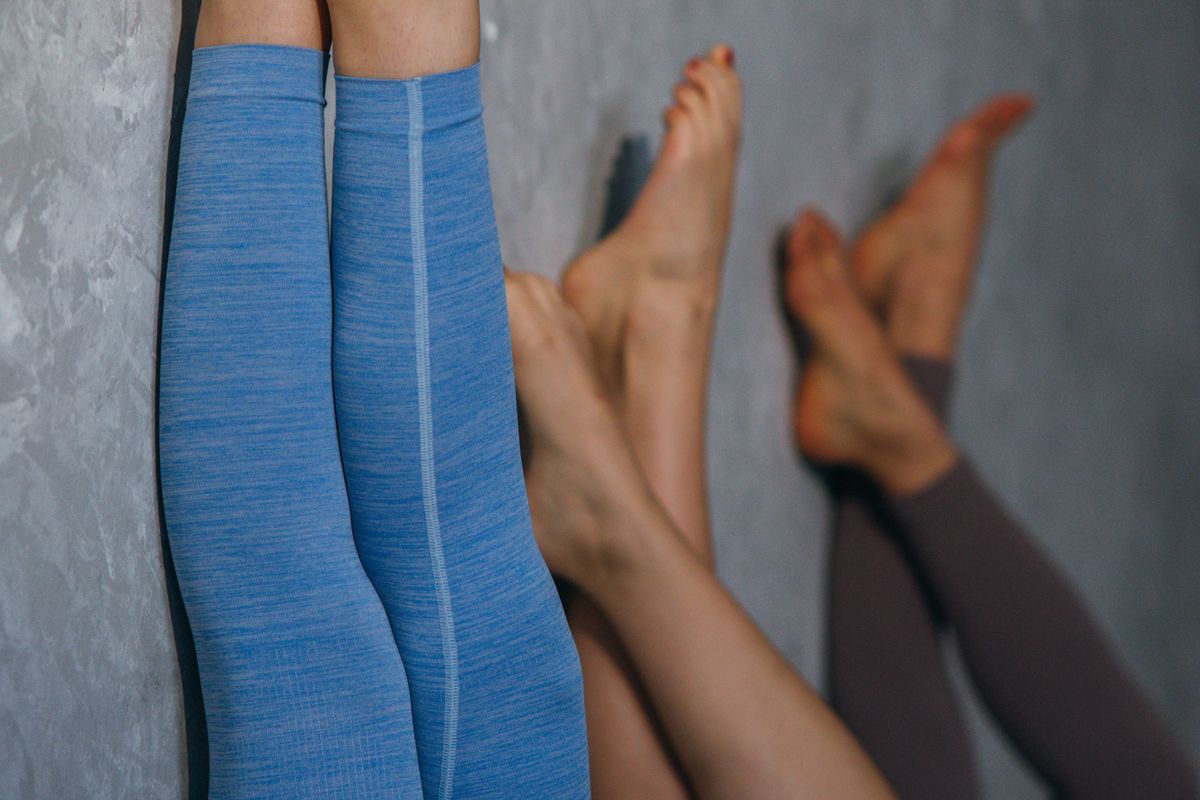
Every pair of black leggings passes the fitting-room test. The ones worth owning pass the daylight squat test. Opacity is not a marketing claim; it is a property of the knit, decided by construction long before anyone prints a label.
What blocks light is the loop structure of the knit: how tightly the yarns sit together. Suppliers of performance knits generally place squat-proof leggings in a mid-to-heavy weight range, commonly 220 to 300 GSM, grams per square meter, with anything below roughly 220 GSM risky in lighter colors. Weight alone guarantees nothing. GSM measures how much yarn sits in a square meter, not how that yarn is looped, and the looping is what stops light. Two fabrics at the same GSM can behave completely differently under stretch, and a dense 240-GSM knit can be more opaque than a loose 280-GSM one because its packed loops leave fewer openings for light to pass through.
This is also why opacity cannot be judged from a product page. Weight, if a brand mentions it at all, appears as a single number with no information about knit structure. The number tells you a fabric is in the plausible range. It does not tell you the fabric will stay opaque at full stretch.
Elastane content is the other half of the equation. Blends running roughly 18 to 25 percent elastane pull the loops closed again after every stretch. That recovery is what keeps a fabric opaque under load: the loops spring back to their packed position instead of sitting stretched open.
It is also why recovery and opacity fail together. A fabric that bags at the knees is thinning at the seat, because the same elastic yarns are responsible for both. Once those yarns stop snapping the loops closed after each stretch, the knit relaxes and the seat goes sheer even though the fabric never lost a gram of weight. Any legging that has gone shapeless has also gone see-through; the two failures are one failure.
Opacity failures are not evenly distributed. The seat and the back rise are the highest-curvature zones on the body, and curvature is exactly what stretches a knit open: the fabric has to cover more surface with the same amount of yarn, so the loops spread and the gaps between them widen. A pair can look solid standing in front of a mirror and fail completely in a deep squat, which is why the squat itself, not a stretch between two fingers, is the honest test.
Size feeds the same mechanism. The same legging is more sheer in a larger size because the knit stretches over more curvature to reach the same coverage. Color compounds it. Black and espresso absorb light and can run slightly lighter in weight, while cream and pastels reflect light, which makes every open loop visible; those shades need the tightest knits in the range.
The industry check costs nothing:
| What you see | What it usually means |
|---|---|
| Sheer only at the seat in a deep squat | Marginal density at high stretch; the size may also be too tight |
| Sheer across the whole leg when stretched | Fabric is too thin overall |
| Opaque new, sheer after several washes | Elastane heat damage — hot dryer or fabric softener |
| Frosted, matte patches | Surface abrasion and pilling; cosmetic, but it thins the knit slightly |
Read the table as a diagnostic, not a scorecard. Sheerness at the seat alone points to marginal density or a size too tight. Sheerness down the whole leg means the fabric was too thin from the start. A pair that was opaque new and goes sheer after several washes points at the laundry routine, not the purchase.
See-through at the waistband seam is a related case. Seams interrupt the knit, and a coverstitch over a thin panel lets light through before the panel itself does, so a pair can pass everywhere except a narrow line at the waist. That pattern in the table reads as marginal density rather than a size problem.
Elastane is destroyed by heat, chlorine and fabric softener, not by wear. A hot dryer cycle cooks the elastic yarns until they stop recovering, and the knit relaxes open over the hips with every squat after that. The care label says the same thing if you know how to read it (how to read care labels): wash cold, inside out, no softener, tumble low or air dry. Pairs washed this way hold their opacity for years. Pairs washed hot go sheer in months, which is why the fifth step of the squat test matters more than it looks.
Since most brands do not publish GSM, judge the proxies. Read the blend percentage first, then check whether the elastane is a named brand such as Lycra or Creora rather than a generic listing. Feel the fabric for a dense, matte hand. Look for construction described as double-knit or interlock, and treat the absence of any construction detail as information too. Then buy the color you will wear in the light you will wear it: a legging opaque in the gym at dusk may not be at a midday park.
Our black leggings guide applies these criteria to specific pairs, and the tights denier guide covers the same opacity logic in hosiery weights. For why recovery and durability travel together at the fiber level, see the fabric guide.
No. Black and navy absorb light and forgive lighter fabric weights, so they fail less often — but a thin knit still goes sheer at the seat no matter how dark the dye is. Cream, sage and pastels reflect light, which makes every open loop visible; those shades need the tightest knits and the most disciplined testing.
They can, if the elastane is damaged. Heat, chlorine and fabric softener break down elastane, and once the elastic yarns stop snapping the knit loops closed after each stretch, the fabric relaxes and thins over the seat. Wash cold, inside out, skip softener, and dry on low heat or air dry to slow it down.
Brands rarely publish GSM. Use proxies instead: the blend percentage, whether the elastane is a named brand like Lycra or Creora, a dense matte hand-feel, and whether the construction is described as double-knit or interlock. Fit also matters — the same legging is more sheer in a larger size because the knit stretches over more curvature.
Everything on this page comes back to one question: what does the label tell you, and what does the thing do on month three? Start at the care companion to build a washing and storage routine that fits what you actually own.
The ASTM D5489 symbol system, decoded operation by operation.
Cool-water washing, de-pilling without damage, moth-proof storage.
What feeds the aging curve and what breaks it.
Claire Whitmore · Updated October 12, 2026
Claire Whitmore · Updated October 12, 2026
Claire Whitmore · Updated October 10, 2026
Claire Whitmore · Updated September 19, 2026