Apparel
Johnny Was Dresses: What the Care Label Says About the Price
Johnny Was dresses from $230 to $550, judged on the brand's own fabric and care disclosures — which machine-washable pieces make sense and where dry-cleaning taxes the price.
Clothing, shoes & accessories, honestly reviewed
Apparel
Johnny Was dresses from $230 to $550, judged on the brand's own fabric and care disclosures — which machine-washable pieces make sense and where dry-cleaning taxes the price.
By Claire Whitmore · Fashion Editor
Last updated September 20, 2026
Some links below are affiliate links — if you buy through them, we may earn a commission at no additional cost to you.
Best Value
4.3/5Machine-washable rayon-spandex at the entry price, with a 44 1/2 inch front length — the lowest care burden and the lowest cost of ownership in the line.
~$230 suggested
Best for Everyday Wear
4.2/5100% cotton with the brand's signature embroidery, machine wash cold, and a removable tassel belt — the embroidery look without the dry-cleaning tax.
~$255 suggested
Best Silk Blend
4.0/565% viscose 35% silk in a bias cut with published bust, waist and hip measurements — the occasion-piece of the group, priced and cared for like one.
~$550 suggested
Johnny Was sells a distinctive look — dense floral embroidery, saturated prints, flowing bohemian cuts — at prices from about $230 to $550 for a dress. What makes the brand unusually easy to review honestly is its own product pages: every single dress lists the exact fabric blend, the care instruction, and garment measurements for a size Medium. That transparency exposes an uncomfortable pattern. At this brand, the care label predicts your real cost of ownership better than the price tag does.
The clearest way to see it is to line up what the label says. The Bertina Maxi Dress costs $420 and is 100% nylon mesh. The Lorenth Bias Tea Length Dress, at $550, is a 65% viscose 35% silk blend with the most flattering cut of the group. Meanwhile the Embroidered Belt Henley Dress — 100% cotton, with embroidery and a removable tassel belt — is $255 and can go in the washing machine. If you are paying Johnny Was prices, you are paying for the print and the handwork, not for fiber.
That has two practical consequences. First, a higher price buys no guarantee of better material, so the price alone cannot rank these dresses for you. Second, care burden varies more than price does: the $255 cotton Henley costs less per wear than the $420 mesh maxi precisely because one goes in the laundry and the other goes to a cleaner. Decide what you are actually paying for before you decide it is worth it.
| Product | Fabric | Care | Price |
|---|---|---|---|
| The Janie Favorite Double V-Neck Midi Dress | 95% rayon, 5% spandex | Machine wash cold | ~$230 |
| Embroidered Belt Henley Dress | 100% cotton | Machine wash cold | ~$255 |
| Linen Relaxed Henley Dress | 100% linen | Machine wash cold | ~$275 |
| Bertina Maxi Dress | 100% nylon mesh | Dry clean only | ~$420 |
| Lorenth Bias Tea Length Dress | 65% viscose, 35% silk | Dry clean only | ~$550 |
The Janie Favorite Double V-Neck Midi Dress is the entry point at about $230, cut from 95% rayon and 5% spandex. Rayon gives the fluid drape the brand is known for, and the small spandex share helps the fabric recover its shape after a wash instead of bagging at the seat. With a 44 1/2 inch front length it sits mid-calf on most heights, and the care label allows a cold machine wash followed by a low tumble. For a daily-wear piece, that label is the whole argument.
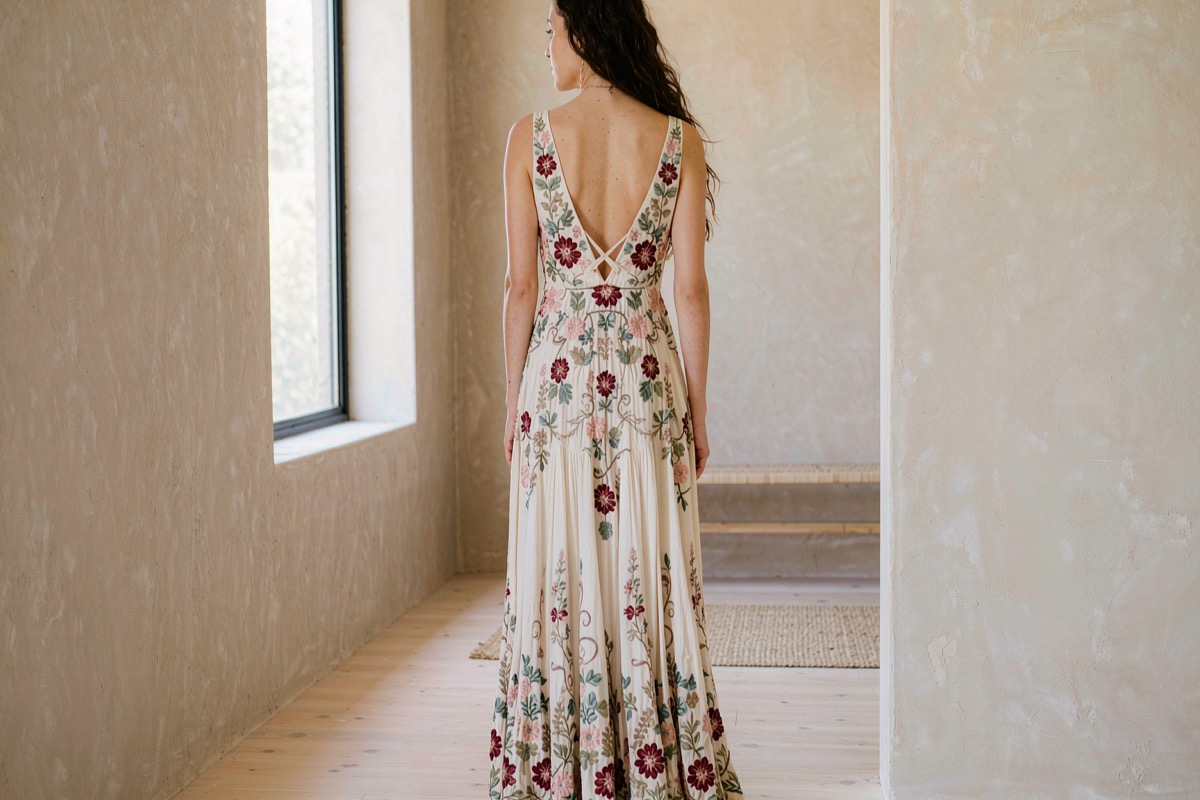
The Embroidered Belt Henley Dress, $255 in 100% cotton, is the pick if you want the brand’s signature embroidery without signing up for dry cleaning. The tassel belt comes off for washing, and cotton tolerates the machine in a way embroidered synthetics often do not. Wash it inside out on cold so the embroidery threads rub against the drum as little as possible, and the stitching stays crisp for years of laundries.
The Linen Relaxed Henley Dress at $275 rounds out the washable trio. Linen is the most durable of the three fibers here and behaves the opposite of most fabrics under washing: it gets softer and more comfortable with every cycle, though it will wrinkle, and that is part of the fabric’s character rather than a defect. All three pieces carry the same care instruction, machine wash cold and tumble dry low, which makes them the low-friction core of a Johnny Was purchase.
Run the wear math on each. A $230 midi worn twice a month for two years costs under $5 per wear before a single cleaning fee. The same arithmetic on a $550 dry-clean-only dress, cleaned monthly, lands at several times that figure once the cleaner’s invoice joins the price. The washable trio also removes the pre-wear anxiety that keeps expensive garments on the hanger, which is its own kind of value: a dress that goes in the laundry actually gets worn.
Embroidery is what the brand charges for, so it deserves a closer look than the photos suggest. Density is the first signal: dense, closely spaced stitching that covers the ground fabric indicates heavy machine time, which is the legitimate part of the price. Sparse embroidery over a large panel reads as a print decision, not a handwork one, and should be weighed accordingly.
The second signal is stitch type. Satin and fill stitches stand up to washing and wear; long running stitches and loose thread accents snag on jewelry and bag straps no matter how carefully the dress is laundered. The Embroidered Belt Henley’s embroidery is the washable-proof case: its stitching survives the machine on cold, which is what lets the whole dress carry a machine-wash label at all. If a dry-clean-only dress’s price rests on embroidery, ask whether that embroidery could not have survived a laundry cycle — the label answers for the brand.
Most of the line is dry clean only, including pieces where that seems wrong: the Mandie Peasant Mini Dress ($398, 100% cotton) instructs you to remove the tassel before dry cleaning. A cotton dress that must be professionally cleaned is paying a dry-cleaning premium on the simplest fiber in the line.
The recurring cost compounds quietly. At typical US prices of $10 to $20 per visit, a dry-clean-only dress cleaned a couple of times a season adds roughly $300 to $600 over five years. On the $478 nylon mesh maxi, that approaches the cost of a second dress, which is why the sticker price understates what you signed up for. The machine-washable minority — the Janie Favorite midi at $230, the Embroidered Belt Henley at $255, the Linen Relaxed Henley at $275 — are where the brand’s cost-per-wear math starts to work.
The tax also changes how you live with the garment. A machine-washable dress can be spot-cleaned after a spill and worn again the same week. A dry-clean-only dress waits for a trip to the cleaner, which means it either sits in the closet between visits or gets worn in a state you would rather not admit. Over a multi-year ownership, that friction shapes the wardrobe more than any single defect would.
The Bertina Maxi shows the sharpest version of the mismatch: $420 for 100% nylon mesh, dry clean only. Mesh also snags more readily than woven fabric, so a garment that requires gentle professional handling is also one of the more fragile pieces in the line. If a boho maxi is the goal, the math argues for doing it in one of the washable fabrics.
The most useful independent check is Reviewed’s 2023 test of the brand by Liv Birdsall, who wore three Johnny Was pieces weekly for a month. Her verdict: everything held up well to regular wear and washing, but the quality did not feel superior to much cheaper brands, and she could not justify $165 for a rayon-and-spandex tiered skirt. We read that review before writing this one, and our ratings below land on the same fault line — the scorecard weighs fabric and care burden against price, not print appeal.
It is worth being clear about what a one-month test can and cannot tell you. It confirms construction survives regular wear and that washing does not immediately degrade the fabric. It cannot tell you how embroidery looks after two years of laundering or how a dry-clean-only blend ages between professional cleanings, and those are exactly the questions the care labels raise.
| Product | Fabric | Care | Price |
|---|---|---|---|
| The Janie Favorite Double V-Neck Midi Dress | 95% rayon, 5% spandex | Machine wash cold | ~$230 |
| Embroidered Belt Henley Dress | 100% cotton | Machine wash cold | ~$255 |
| Lorenth Bias Tea Length Dress | 65% viscose, 35% silk | Dry clean only | ~$550 |
Sizing is generous by design. The brand’s own size guide puts a regular midi at 48 to 51 inches long and offers petite lengths at 44 to 47 inches, plus sizes through 3X, and every product page publishes the size Medium garment measurements — typically 39 to 42 inches at the bust. The letter on the tag tells you less than the measurement line beneath it, because the bohemian cuts add volume on purpose.
Two habits make remote sizing low-risk. Compare the published garment measurements against a dress you already own and like the fit of, rather than against your body. And if you want less volume, size down, since the cuts are drafted full and a smaller letter usually still fits the bust. The petite lengths matter more than the size letter for proportion: on a 48 to 51 inch midi, six inches of length is the difference between mid-calf and ankle.
Cold water does most of the work. It keeps the rayon-spandex from stressing, protects embroidery thread tension, and limits dye release on deeply saturated prints. Turn the embroidered pieces inside out before they go in the machine, and a mesh laundry bag adds a cheap layer of protection for tassels and button plackets.
For drying, honor the low-heat instruction on the label. Spandex degrades with heat over repeated cycles, so a low tumble or a hang dry keeps the fabric recovering its shape for longer. Linen can take a full low tumble and comes out softer for it; pull it while slightly damp and the wrinkles relax as it finishes drying. None of the three needs special detergent, but skip anything with bleach, since it dulls saturated prints faster than any other laundry mistake.
Ironing deserves one caution. The embroidered panels should be pressed from the back, over a pressing cloth, so the iron never flattens the raised stitches — flattened embroidery loses the texture that separates it from a print. All three fabrics iron well at the temperature their care symbols allow, and hanging each piece for ten minutes after pressing sets the finish.
Judged on cost of ownership, the washable trio is where a first Johnny Was dress makes sense: real brand look, full laundry compatibility, and prices from $230 to $275. The dry-clean-only pieces are occasion buys, and the Lorenth at $550 is the strongest of them — a bias cut in a viscose-silk blend with published bust, waist and hip measurements, priced and cared for like the event piece it is. What the price never buys, anywhere in the line, is a fabric upgrade; check the label before the price, every time.
If you are comparing fabrics across brands before committing, our fabric guide: clothes that last breaks down how rayon and silk blends age, and how to read care labels explains what “dry clean only” actually obligates you to. For the same treatment of the brand’s signature toppers, see Johnny Was kimonos.
| Product | Fabric | Care | Price |
|---|---|---|---|
| The Janie Favorite Double V-Neck Midi Dress | 95% rayon, 5% spandex | Machine wash cold | ~$230 |
| Embroidered Belt Henley Dress | 100% cotton | Machine wash cold | ~$255 |
| Lorenth Bias Tea Length Dress | 65% viscose, 35% silk | Dry clean only | ~$550 |
The silhouettes are cut generously, and the brand publishes exact garment measurements on every product page — a size Medium dress typically measures 39 to 42 inches at the bust. Check the measurements line rather than the letter size, and size down if you want less volume.
A few can. The Janie Favorite midi, the Embroidered Belt Henley Dress and the Linen Relaxed Henley Dress are all labeled machine wash cold, tumble dry low. Most embroidered and silk-blend pieces are dry clean only.
The brand prices for embroidery, artisan prints and small-batch fabric. But the fabric label does not always justify it: a 100% nylon mesh maxi costs $478, while fully machine-washable cotton pieces sit below $260.
Everything on this page comes back to one question: what does the label tell you, and what does the thing do on month three? Start at the care companion to build a washing and storage routine that fits what you actually own.
The ASTM D5489 symbol system, decoded operation by operation.
Cool-water washing, de-pilling without damage, moth-proof storage.
What feeds the aging curve and what breaks it.
Claire Whitmore · Updated October 10, 2026
Claire Whitmore · Updated October 9, 2026
Claire Whitmore · Updated October 9, 2026
Claire Whitmore · Updated October 1, 2026